
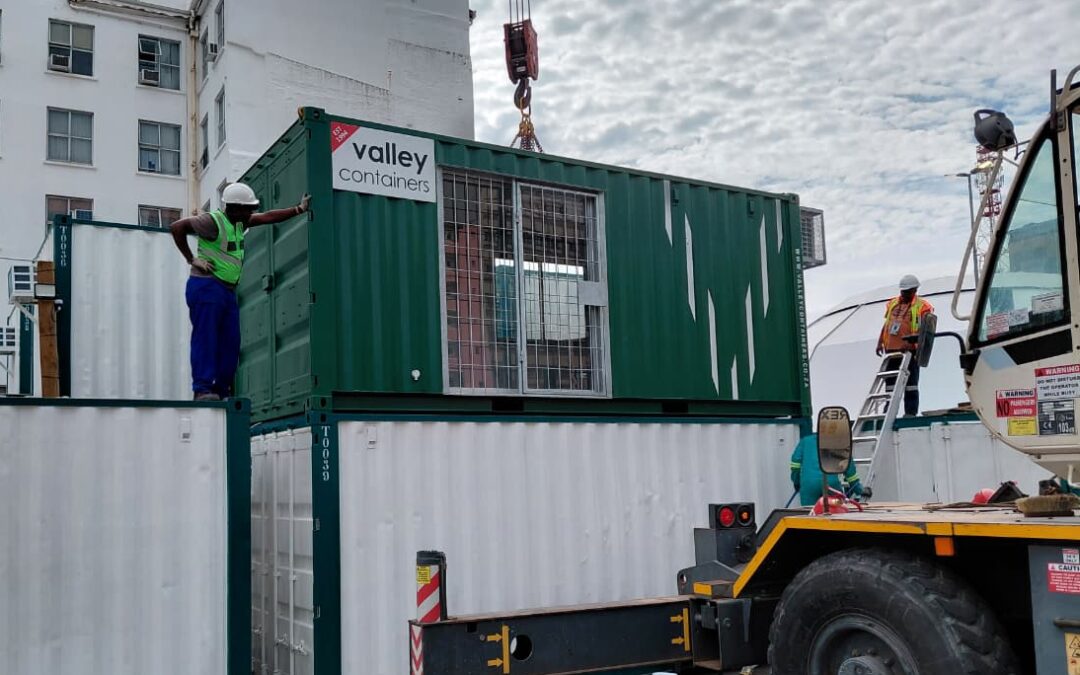
The way businesses operate is changing. Flexibility, speed, and cost-efficiency are now more important than ever, which is why the container office has become increasingly popular.
From construction companies and farms to startups and corporate project teams, businesses across South Africa are increasingly choosing:
- Mobile office containers
- Site office containers
- Custom-built office solutions using converted containers
But how do they really compare to traditional offices?
What Is a Container Office?
A container office is a converted shipping container that has been transformed into a fully functional workspace. Through professional container conversions, these units can include everything you would expect in a modern office:
- Electrical wiring and plug points
- LED lighting
- Insulation for temperature control
- Air conditioning
- Windows and secure doors
- Flooring and interior finishes
These converted containers are designed to be plug-and-play, meaning they can be delivered and used almost immediately.
Advantages Over Traditional Offices
1. Cost Savings
Traditional office construction in South Africa is expensive. Between materials, labour, approvals, and delays, costs can escalate quickly.
In contrast, a mobile office container offers:
- Significantly lower upfront costs
- No major construction expenses
- Minimal site preparation
For businesses looking to scale or operate on tighter budgets, container offices provide a far more accessible solution.
2. Speed of Deployment
One of the biggest advantages of a site office container is speed.
A traditional office can take months to complete. A container office can be:
- Delivered within days
- Installed within hours
- Operational almost immediately
This is especially valuable for:
- Construction projects
- Remote work sites
- Temporary business expansions
3. Flexibility and Mobility
Traditional buildings are fixed; once built, they cannot be moved.
Container offices, however, are designed for flexibility. A mobile office container can be:
- Relocated to a new site
- Reconfigured as your needs change
- Expanded by adding additional units
This makes them ideal for businesses that operate across multiple locations or projects.
4. Durability
South African conditions can be harsh, from extreme heat to strong winds and dust.
Container offices are built from steel shipping units designed to withstand global transport conditions. This makes them:
- Highly durable
- Weather-resistant
- Suitable for remote or rugged environments
This is why they are widely used as site office containers on construction and mining sites.
When Does a Container Office Make the Most Sense?
A container office is the ideal choice when:
- You need a workspace quickly
- Your business operates on multiple sites
- You want to avoid high construction costs
- You require a temporary or semi-permanent solution
- Your site is remote or difficult to build on
When a Traditional Office Might Still Be Better
While container offices offer many advantages, traditional buildings may still suit businesses that:
- Require a large, permanent corporate headquarters
- Need multi-storey office space
- Have long-term fixed infrastructure plans
Combining Container Solutions for Maximum Efficiency
One of the biggest advantages of working with containers is the ability to combine different units into a complete setup.
For example:
- A site office container for management
- Storage containers for tools and materials
- An ablution container for staff facilities
This modular approach allows businesses to build a complete operational hub quickly and efficiently.
Final Thoughts
When comparing a container office to a traditional office, the right choice ultimately depends on your business needs.
However, for companies looking for:
- Speed
- Cost-efficiency
- Flexibility
- Durability
A mobile office container or site office container is often the smarter, more practical solution.
With modern container conversions, these units are no longer just temporary structures; they are fully functional, professional workspaces designed for today’s business environment.